Semaglutide and other GLP-1 receptor agonists are reshaping how medicine approaches obesity, appetite regulation, and long-term metabolic disease.
Originally developed for type 2 diabetes, semaglutide has moved far beyond endocrinology. It is now influencing discussions around cardiovascular risk, fatty liver disease, chronic weight management therapies, and the broader economics of preventive healthcare.
The growing influence of GLP-1 drugs such as Ozempic, Wegovy, and oral semaglutide therapy Rybelsus reflects a broader shift in how healthcare systems understand obesity itself.
What was once treated primarily as a lifestyle issue is increasingly being approached as a biologically regulated chronic disease involving appetite signalling, energy balance, metabolic adaptation, and long-term cardiometabolic risk.
What makes the current moment unusual is not simply the scale of demand for GLP-1 drugs, but the possibility that pharmacological appetite regulation may become a routine part of long-term chronic disease care.
Why GLP-1 Drugs Changed the Obesity Conversation
For decades, obesity occupied an uncertain position within healthcare systems. Despite its strong association with cardiovascular disease, type 2 diabetes, fatty liver disease, kidney dysfunction, and reduced life expectancy, obesity remained clinically significant yet inconsistently treated as a chronic disease.
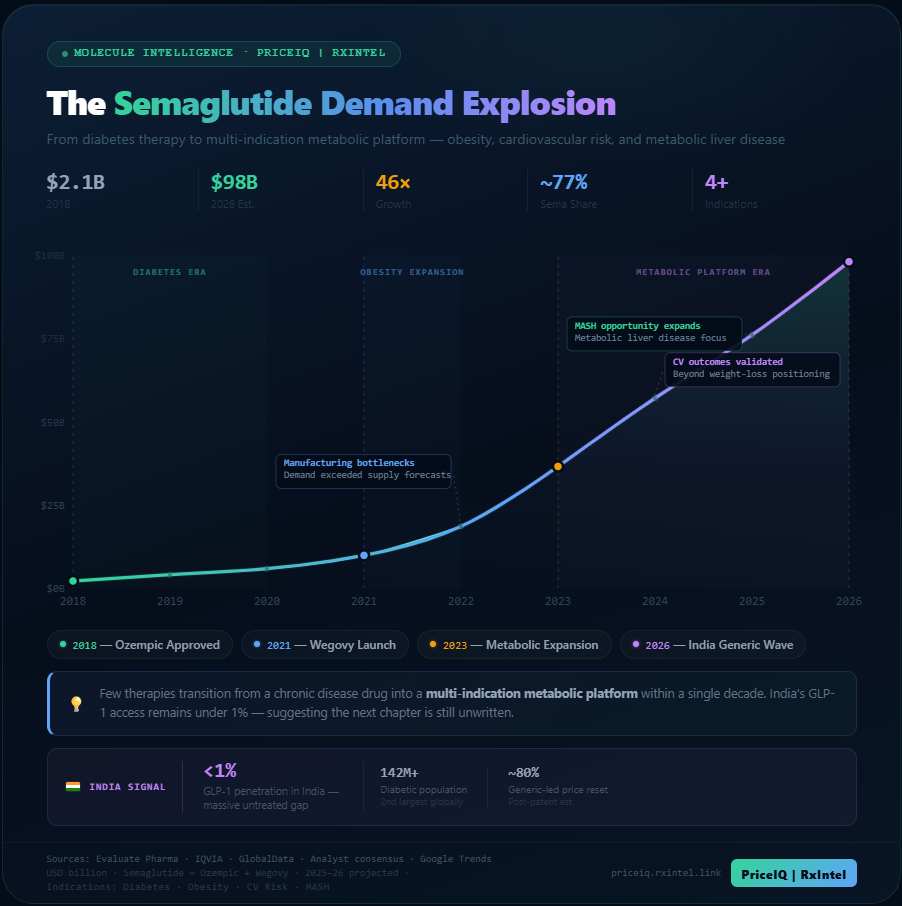
The emergence of GLP-1 receptor agonists changed that dynamic substantially.
Semaglutide altered that landscape because the magnitude of observed weight reduction — combined with emerging cardiovascular outcome data — shifted obesity pharmacotherapy from a peripheral specialty into mainstream clinical discussion.
Clinical trials involving semaglutide also demonstrated measurable cardiovascular benefits in high-risk patient populations, reinforcing the idea that obesity pharmacotherapy may influence broader chronic disease outcomes rather than cosmetic weight reduction alone.
The result is that obesity medicine is no longer evolving solely as a therapeutic category. It is increasingly influencing how healthcare systems think about prevention, chronic disease burden, workforce health, and long-term medical expenditure.
The Shift From Weight Loss to Metabolic Regulation
Perhaps the most consequential shift surrounding GLP-1 therapies is that the conversation is already extending beyond weight loss itself.
Historically, obesity was frequently discussed through behavioral frameworks centered on calorie intake, physical activity, and personal lifestyle modification. Modern metabolic research, however, increasingly suggests that appetite, satiety, insulin signaling, and energy expenditure are regulated through highly complex neuroendocrine systems that resist simple voluntary control.
The discussion is therefore shifting away from weight reduction as an isolated endpoint and toward broader questions surrounding long-term metabolic health:
- → Cardiovascular risk reduction
- → Glycaemic stability
- → Metabolic maintenance
- → Body composition preservation
- → Chronic disease prevention
The broader implication is that obesity medicine may increasingly converge with preventive cardiology, endocrinology, geriatric medicine, and population-health strategy rather than remaining an isolated specialty focused primarily on body weight.
What Search Trends Reveal About the GLP-1 Market
Changes in public engagement around GLP-1 therapies are becoming visible through evolving search and information-seeking behavior. Initial attention was dominated by rapid weight-loss narratives. More recent search behavior increasingly reflects questions associated with chronic treatment management.
One particularly notable trend is the level of interest surrounding oral GLP-1 therapies. Although injectable formulations still dominate current clinical use, search behavior increasingly suggests that convenience, treatment persistence, and ease of long-term adherence may become major determinants of future adoption.
Economic concerns are also becoming far more prominent. Questions surrounding affordability, reimbursement eligibility, insurance coverage, and long-term treatment cost increasingly reflect the reality that obesity pharmacotherapy may be approaching a scale capable of exerting meaningful pressure on healthcare budgets.
You can compare semaglutide brands and their pricing signals in detail on PriceIQ.
The Next Phase of Obesity Medicine
Pharmaceutical development is now moving rapidly toward oral GLP-1 therapies, combination incretin drugs, and multi-pathway metabolic agents designed to influence appetite signaling, satiety, insulin response, and energy regulation simultaneously.
At the same time, substantial uncertainties remain unresolved. Healthcare systems must still confront questions surrounding long-term adherence, treatment durability after discontinuation, manufacturing scalability, economic sustainability, and equitable access across different patient populations.
More fundamentally, GLP-1 therapies have accelerated a broader conceptual transition in medicine: from viewing obesity primarily through behavioral frameworks toward recognizing metabolic regulation as a biologically complex system potentially requiring long-term therapeutic intervention.
The central question is therefore no longer whether obesity can be pharmacologically treated. It is whether healthcare systems are prepared for a future in which long-term metabolic intervention becomes an increasingly routine component of modern medicine.
Explore broader GLP-1 and obesity medicine intelligence at RxIntel.
View GLP-1 intelligence hub →Key Questions Emerging Around GLP-1 Therapies
Are GLP-1 therapies being viewed as obesity drugs alone?
Not increasingly. Although semaglutide gained broad public attention through obesity treatment and weight management discussions, GLP-1 therapies are now increasingly evaluated within wider cardiometabolic contexts involving cardiovascular risk, glycaemic regulation, chronic disease prevention, and long-term metabolic health.
Why are oral GLP-1 therapies attracting growing attention?
Interest in oral semaglutide appears to reflect a broader shift toward long-term treatment practicality. While injectable formulations such as Ozempic and Wegovy currently dominate public visibility, oral semaglutide formulations such as Rybelsus may become increasingly important if convenience, adherence, and chronic-use persistence emerge as major determinants of treatment adoption.
Why has the impact of GLP-1 therapies extended beyond endocrinology?
The influence of GLP-1 therapies now extends beyond endocrinology because obesity itself intersects with multiple chronic diseases, including cardiovascular disease, fatty liver disease, renal dysfunction, and metabolic syndrome.
What are the major unresolved questions surrounding long-term GLP-1 therapy?
Despite strong clinical demand, major uncertainties remain surrounding long-term obesity pharmacotherapy. Current debates increasingly focus on treatment durability after discontinuation, affordability, reimbursement sustainability, muscle preservation during prolonged weight reduction, manufacturing capacity, and equitable healthcare access.
Could GLP-1 therapies reshape how chronic disease prevention is approached?
Potentially. One of the deeper implications of GLP-1 therapies is that they may accelerate broader acceptance of long-term metabolic intervention as part of routine preventive medicine.
Sources & Editorial Note
This article synthesizes current developments in obesity pharmacotherapy, GLP-1 research, metabolic medicine, and evolving public-health discussion surrounding long-term metabolic intervention.
- → Published clinical-trial findings involving GLP-1 receptor agonists
- → Evolving pharmaceutical developments in obesity and metabolic medicine
- → Public-health and healthcare-economics discussions
- → GLP-1 market intelligence and pricing data via PriceIQ by RxIntel
This article is intended for informational and analytical purposes only and should not be interpreted as medical, therapeutic, or investment guidance.